The Role of OBD in Monitoring Fuel Pressure

Fuel pressure plays a vital role in engine performance. Too little pressure can cause engine hesitation, while excessive pressure can lead to inefficient fuel combustion.
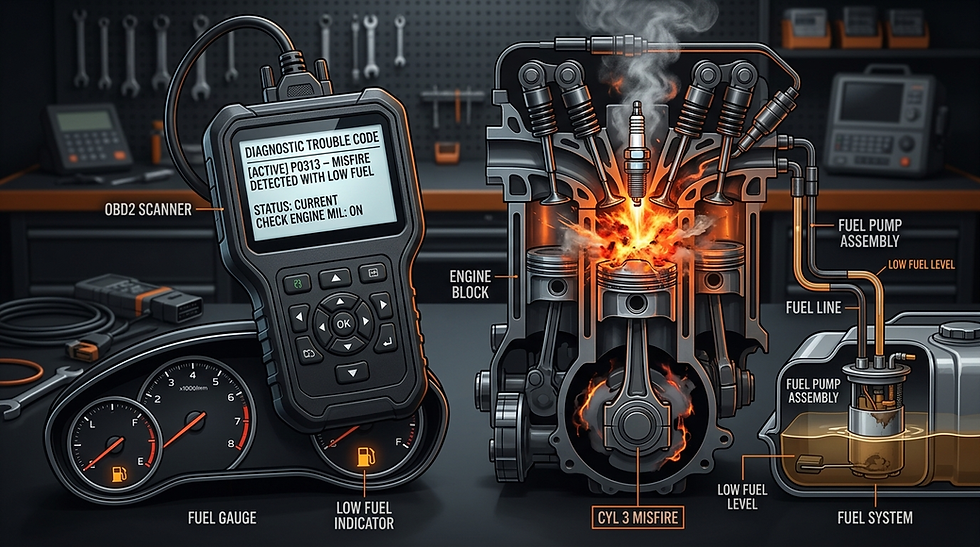
Through OBD fuel pressure monitoring, modern vehicles continuously track fuel system performance to maintain proper operation.
How Fuel Pressure Affects Engine Performance
Fuel pressure determines how much fuel is delivered to the injectors.
Incorrect pressure can cause:
Engine stalling
Hard starting
Poor acceleration
Increased fuel consumption
Maintaining balanced pressure ensures proper combustion.
How OBD Monitors Fuel Pressure
OBD systems use sensors to measure fuel rail pressure and monitor how it changes under different driving conditions.
The ECU analyzes this data along with fuel trim readings and engine load.
If readings fall outside normal ranges, a diagnostic code is generated.
Problems Detected by OBD
Fuel pressure diagnostics may identify:
Weak fuel pumps
Clogged fuel filters
Faulty pressure regulators
Fuel line restrictions
Early detection prevents engine performance problems.
Conclusion
OBD fuel pressure monitoring helps ensure that engines receive the correct amount of fuel for efficient combustion. By detecting fuel system problems early, drivers can prevent
performance loss and maintain optimal engine health.
Regular diagnostics help keep the fuel system operating smoothly.