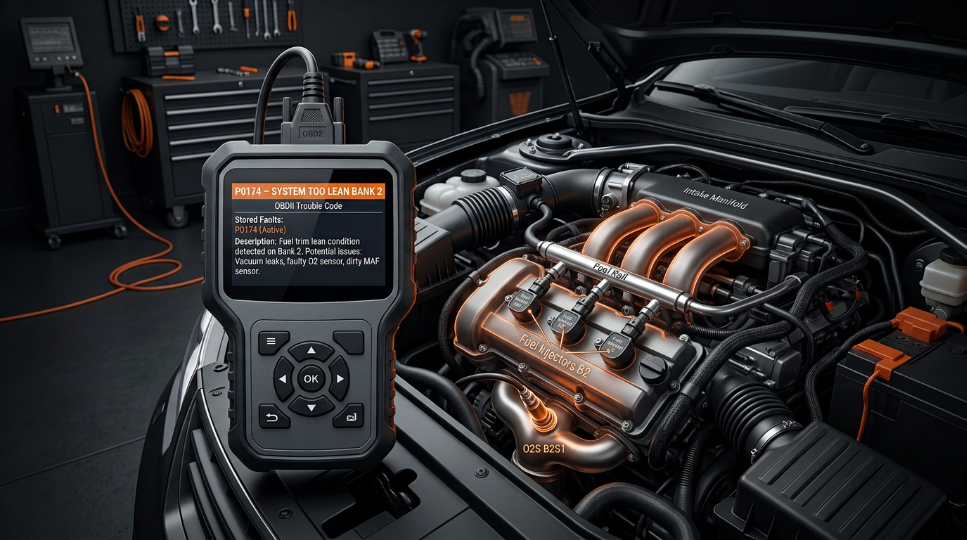
P0700 Code: Causes, Symptoms, Diagnosis & How to Fix It

The P0700 code means Transmission Control System Malfunction.
P0700 is a generic OBD2 powertrain code used on vehicles with electronically controlled automatic transmissions. Importantly, P0700 is usually an informational code rather than a specific transmission fault. It indicates that the Transmission Control Module (TCM) has detected a problem and requested that the Check Engine Light be illuminated.
To find the actual cause, you normally need a diagnostic scanner capable of communicating with the TCM and retrieving the additional transmission-specific trouble codes.
P0700 Code Symptoms
The symptoms can vary significantly depending on the underlying transmission problem. Common symptoms include:
Check Engine Light
Harsh or delayed shifting
Transmission slipping
Failure to shift properly
Transmission stuck in one gear
Reduced vehicle performance
Poor fuel economy
Limp mode
Abnormal transmission behavior
Some vehicles may show the P0700 code with few noticeable symptoms, while others may have significant shifting problems.
Common Causes of P0700
Because P0700 is a general transmission-system indication, several different problems can trigger it.
1. Additional Transmission Fault Code
The most important clue is often another code stored inside the TCM. P0700 commonly appears alongside a more specific transmission DTC.
2. Low or Dirty Transmission Fluid
Low fluid level, contaminated fluid, or fluid that no longer meets the manufacturer's specifications can affect transmission operation.
3. Faulty Shift Solenoid
Electronic shift solenoids control hydraulic flow inside the transmission. A faulty solenoid can cause shifting problems and trigger transmission-related codes.
4. Damaged Wiring or Connectors
Corroded connectors, broken wires, loose connections, or electrical shorts can interfere with communication or transmission control.
5. Transmission Mechanical Problem
Internal wear, valve-body problems, clutch problems, or other mechanical faults can cause the TCM to detect abnormal transmission operation.
6. Faulty TCM
A failed Transmission Control Module is possible, but it should not be assumed simply because P0700 is present. Other transmission and electrical causes should be diagnosed first.
How to Diagnose the P0700 Code
The most important step with P0700 is to scan the transmission module for additional codes.
1. Scan the TCM
A basic code reader may only display P0700. Use a scanner with TCM access to retrieve the underlying transmission DTCs.
2. Record All Codes and Freeze-Frame Data
Before clearing anything, record every stored and pending code. Freeze-frame information can show the operating conditions when the fault occurred.
3. Check Transmission Fluid
Inspect the transmission fluid level and condition according to the manufacturer's procedure. Look for signs of contamination, overheating, or leakage.
4. Inspect Wiring and Connectors
Check the transmission harness, connectors, grounds, fuses, and related wiring for corrosion, damage, loose connections, or shorts.
5. Check Live Transmission Data
A capable diagnostic scanner can provide transmission data such as gear commands, input/output speeds, solenoid operation, and other manufacturer-specific parameters.
6. Diagnose the Specific TCM Code
Once the underlying TCM code is identified, follow the vehicle manufacturer's diagnostic procedure rather than attempting to repair P0700 by itself.
P0700 should not be diagnosed solely from the code number because it does not identify the exact failed component.
How to Fix P0700
The correct repair depends on the underlying transmission fault. Possible repairs include:
Correcting low transmission fluid
Servicing or replacing contaminated fluid when specified
Repairing damaged wiring
Cleaning or repairing electrical connectors
Replacing a defective shift solenoid
Repairing or replacing valve-body components
Repairing an internal transmission problem
Repairing communication problems with the TCM
Replacing or programming the TCM when testing confirms it has failed
Do not replace the transmission or TCM based only on P0700. The additional TCM codes and diagnostic test results should determine the repair.
Is P0700 Serious?
P0700 can range from a relatively minor electrical or fluid-related issue to a serious transmission problem.
If the vehicle shifts normally and only the Check Engine Light is illuminated, it may be possible to drive it a short distance for diagnosis. However, slipping, harsh shifting, inability to shift, loss of drive, or limp mode should be treated as warning signs.
Continuing to drive with a serious transmission fault can potentially lead to additional damage. If the transmission is behaving abnormally, have it diagnosed promptly.
P0700 vs. P0701: What's the Difference?
Code | Meaning |
P0700 | Transmission Control System Malfunction |
P0701 | Transmission Control System Range/Performance |
P0700 generally indicates that the transmission control system has reported a fault and further diagnosis is required. P0701 provides a more specific range/performance description.
Frequently Asked Questions
Can P0700 be caused by low transmission fluid?
Yes. Low or contaminated transmission fluid can contribute to transmission problems that result in P0700. However, the underlying cause should be confirmed through diagnosis.
Can I drive with the P0700 code?
If the transmission is shifting normally, the vehicle may remain drivable temporarily. If it is slipping, stuck in one gear, shifting harshly, or entering limp mode, avoid unnecessary driving and have it inspected.
Does P0700 mean I need a new transmission?
No. P0700 does not automatically mean the transmission needs replacement. The code is a general indication, and the underlying TCM code must be diagnosed first.
Can a basic OBD2 scanner diagnose P0700?
A basic scanner may identify P0700 but may not access the TCM's additional codes. A more advanced diagnostic scanner with transmission-module access is often needed for complete diagnosis.
Can a bad TCM cause P0700?
Yes, a TCM problem can cause P0700, but TCM failure is only one possibility. Wiring, solenoids, fluid problems, and internal transmission faults can also be involved.