P0314 Code: Causes, Symptoms, Diagnosis & How to Fix It

P0314 means “Single-Cylinder Misfire Detected — Cylinder Not Specified.” It is a generic OBD2 powertrain trouble code indicating that the engine computer has detected a misfire affecting one cylinder but has not identified which cylinder is responsible.
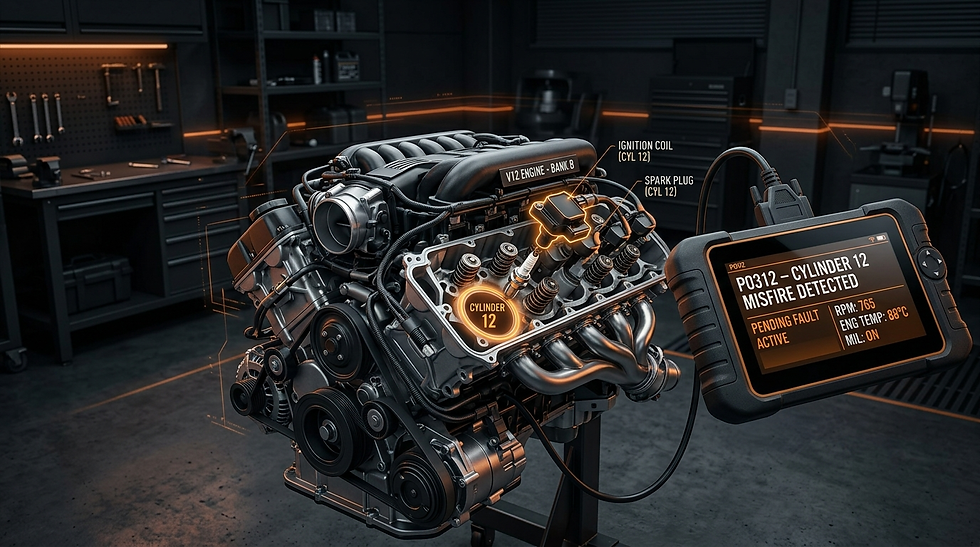
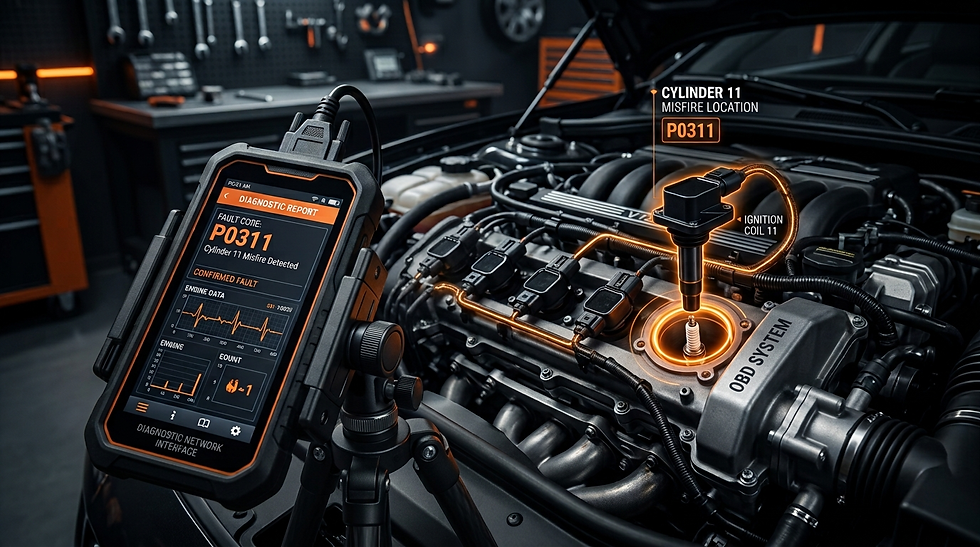
Unlike codes such as P0301, P0302, or P0312, P0314 does not tell you the exact cylinder.
That means diagnosis requires additional testing to determine where the misfire is occurring.
A single-cylinder misfire can be caused by an ignition problem, fuel-delivery issue, intake leak, low compression, wiring fault, or engine timing problem.
P0314 Code Symptoms
Common symptoms of P0314 include:
Check Engine Light
Rough engine operation
Rough or unstable idle
Engine shaking or vibration
Hesitation during acceleration
Reduced engine power
Poor fuel economy
Hard starting
Engine stalling
Unusual exhaust odor
Flashing Check Engine Light during a severe misfire
The severity depends on how frequently the misfire occurs and whether the underlying problem affects one operating condition or the engine continuously.
Common Causes of P0314
Several problems can result in a P0314 code.
1. Faulty Spark Plug
A worn, fouled, damaged, or incorrectly gapped spark plug can cause one cylinder to misfire.
2. Bad Ignition Coil
A weak or failed ignition coil can interrupt the spark required for combustion. Coil packs and spark plug wires should also be inspected when applicable.
3. Faulty Fuel Injector
A clogged or electrically faulty fuel injector can prevent one cylinder from receiving the correct amount of fuel.
4. Vacuum or Intake Leak
An intake leak near a particular cylinder can create an incorrect air-fuel mixture and cause a cylinder-specific misfire.
5. Low Fuel Pressure
Insufficient fuel pressure can affect injector performance and combustion.
6. Low Engine Compression
A burned valve, damaged piston, worn piston rings, head-gasket problem, or other mechanical fault can prevent a cylinder from producing normal combustion.
7. Wiring or Connector Problems
Damaged wiring, loose terminals, corrosion, or poor connections can interrupt ignition or injector operation.
8. Engine Timing Problems
Incorrect camshaft or crankshaft timing can affect combustion and lead to misfire conditions.
How to Diagnose P0314
Because P0314 doesn't specify the cylinder, diagnosis should focus on identifying which cylinder is misfiring and why.
Step 1: Scan for Additional Codes
Connect an OBD2 scanner and check for stored and pending trouble codes. Look for other misfire, fuel, ignition, or sensor codes that may identify the affected cylinder.
Record freeze-frame data when available.
Step 2: Check Misfire Data
If the scanner supports live misfire counters, monitor the individual cylinders while the engine is idling and under load.
This can help identify which cylinder is contributing to the P0314 condition.
Step 3: Inspect Spark Plugs
Once the suspected cylinder is identified, inspect its spark plug for wear, fouling, oil contamination, physical damage, or incorrect gap.
Step 4: Test the Ignition Coil
Inspect the suspected ignition coil and wiring. On vehicles with individual coils, swapping the coil with another cylinder can help determine whether the misfire follows the coil.
Step 5: Check the Fuel Injector
Inspect injector wiring and connector condition. Test injector operation according to the manufacturer's specifications.
Step 6: Check for Intake Leaks
Inspect vacuum hoses, intake connections, and manifold areas. A smoke test can help locate leaks that are not obvious visually.
Step 7: Test Compression
If ignition and fuel systems appear normal, perform a compression test on the suspected cylinder. A leak-down test can provide additional information about internal engine problems.
Step 8: Check Timing and Sensor Data
If the misfire remains unexplained, inspect camshaft/crankshaft timing and relevant engine sensor data.
How to Fix P0314
The repair depends on the cause discovered during diagnosis. Possible repairs include:
Replace a worn or fouled spark plug
Replace a faulty ignition coil
Replace damaged spark plug wires
Repair ignition wiring or connectors
Replace or service a faulty fuel injector
Repair a vacuum or intake leak
Correct low fuel pressure
Repair engine timing problems
Repair low compression or internal engine damage
Replace a failed sensor when testing confirms the fault
After the repair, clear the stored code and perform a road test. Verify that the misfire has stopped and that P0314 does not return.
Is P0314 Serious? Can You Drive With It?
P0314 should be diagnosed promptly because an unidentified misfire can worsen if its cause is not addressed.
If the Check Engine Light is flashing, the engine is shaking severely, the vehicle has major power loss, or it is stalling, avoid driving until the problem is diagnosed.
A persistent misfire can send unburned fuel into the exhaust system and potentially damage the catalytic converter.
If the Check Engine Light is steady and the vehicle is running normally, a short trip to a repair facility may be possible, but the problem should still be checked soon.
P0314 vs P0313
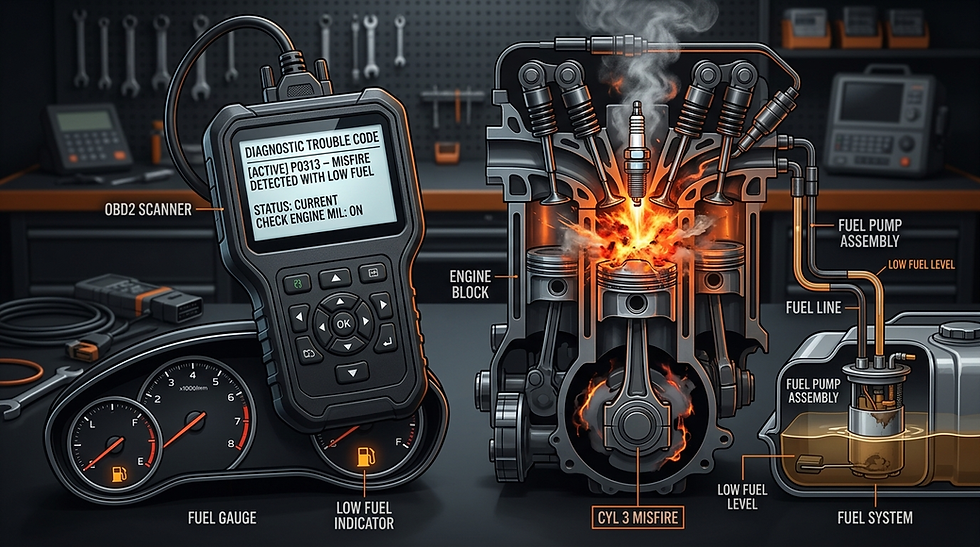
P0314 indicates a single-cylinder misfire without specifying the cylinder, while P0313 indicates a misfire detected with low fuel.
P0314 requires identifying the affected cylinder through additional diagnostic information or testing.
P0314 vs P0300
P0300 indicates random or multiple-cylinder misfires, while P0314 indicates a single-cylinder misfire where the specific cylinder has not been identified.
This distinction matters because P0314 may allow diagnosis to focus on one cylinder once live data or testing identifies it.
Frequently Asked Questions
What does P0314 mean?
P0314 means Single-Cylinder Misfire Detected with the Cylinder Not Specified.
Does P0314 tell me which cylinder is misfiring?
No. Unlike P0301 or P0312, P0314 does not identify the specific cylinder.
Can a bad spark plug cause P0314?
Yes. A worn, fouled, or damaged spark plug can cause a single-cylinder misfire.
Can a bad ignition coil cause P0314?
Yes. A failing ignition coil or coil-pack component can cause a cylinder-specific misfire.
Is P0314 safe to drive with?
It depends on severity. A flashing Check Engine Light, severe shaking, stalling, or major power loss means the vehicle should not be driven until diagnosed.