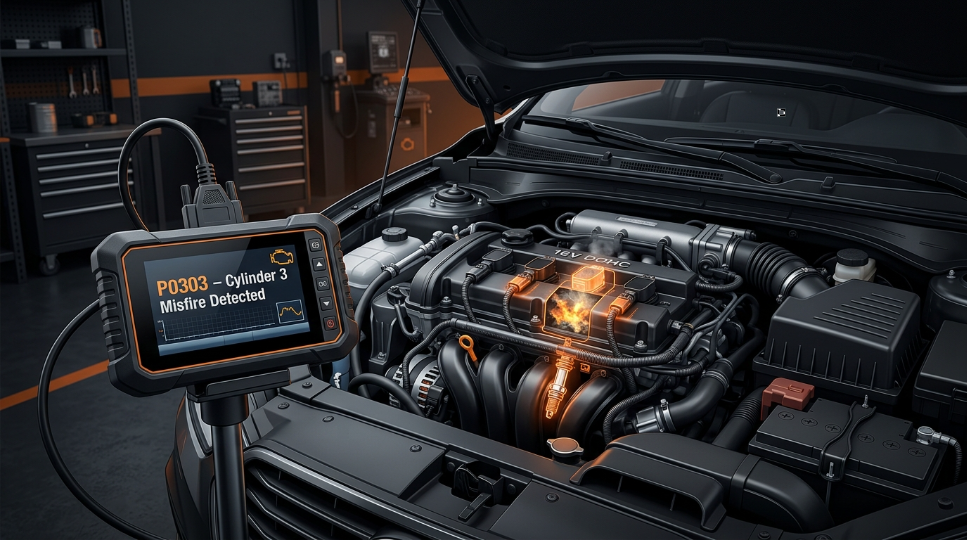
P0306 Code: Causes, Symptoms, Diagnosis & How to Fix It

The P0306 code means Cylinder 6 Misfire Detected.
This generic OBD2 trouble code is stored when the engine computer detects that cylinder 6 is not producing combustion correctly. The code identifies the affected cylinder, but it does not identify the failed part. Possible causes include ignition, fuel delivery, air intake, compression, wiring, or engine timing problems.
Cylinder numbering varies between engines, so always use the vehicle's service information to locate cylinder 6 before testing components.
P0306 Code Symptoms
Common symptoms can include:
Check Engine Light
Rough or shaking engine
Rough idle
Hesitation during acceleration
Reduced engine power
Poor fuel economy
Hard starting
Engine stalling
Unusual exhaust odor
Flashing Check Engine Light
A severe misfire can make the engine run noticeably rough and may increase the risk of catalytic-converter damage.
Common Causes of P0306
1. Faulty Spark Plug
A worn, fouled, cracked, or incorrectly gapped spark plug can prevent cylinder 6 from producing consistent combustion.
2. Bad Ignition Coil
A weak or failed ignition coil can cause the cylinder to lose spark. On vehicles with individual coils, moving the suspected coil to another cylinder can help determine whether the misfire follows the coil.
3. Faulty Fuel Injector
A clogged, restricted, leaking, or electrically defective injector may deliver too much, too little, or no fuel to cylinder 6.
4. Vacuum or Intake Leak
Unmetered air entering the intake system can create an incorrect air-fuel mixture and contribute to a cylinder-specific misfire.
5. Low Fuel Pressure
A weak fuel pump or another fuel-delivery problem can prevent the engine from receiving adequate fuel, particularly under load.
6. Low Compression
A burned valve, damaged piston, worn piston rings, or head-gasket problem can reduce compression and cause a persistent misfire.
7. Wiring or Connector Problems
Damaged wires, loose connectors, corrosion, or poor electrical connections can interrupt ignition-coil or injector operation.
8. EGR or Engine-Management Problems
EGR problems, valve timing issues, or other engine-control faults can sometimes contribute to misfire conditions.
How to Diagnose P0306
1. Scan for Additional Codes
Use an OBD2 scanner to check for stored and pending trouble codes. Record the freeze-frame information before clearing anything.
Look for related fuel, ignition, lean-condition, sensor, or additional misfire codes.
2. Inspect the Spark Plug
Remove the cylinder 6 spark plug and check for:
Carbon buildup
Oil or fuel fouling
Worn electrodes
Incorrect gap
Cracks or other damage
A spark plug inspection can provide useful clues about what is happening inside the cylinder.
3. Test the Ignition Coil
Inspect the cylinder 6 ignition coil, boot, connector, and wiring.
If the vehicle allows coil swapping, move the suspected coil to another cylinder. If the misfire changes cylinders, the coil becomes a strong suspect.
4. Check the Fuel Injector
Inspect the cylinder 6 injector and connector. Depending on the vehicle, testing may include injector resistance, electrical operation, fuel delivery, or injector balance.
5. Check for Intake and Vacuum Leaks
Inspect vacuum hoses and intake components around the affected cylinder.
A smoke test can help identify leaks that are difficult to see during a basic visual inspection.
6. Test Engine Compression
If ignition and fuel checks do not reveal the problem, perform a compression test.
Low compression can indicate an internal mechanical problem such as a valve, piston, ring, or head-gasket issue.
7. Check Timing and Engine Data
If the basic tests pass, check camshaft/crankshaft synchronization and relevant sensor data according to the manufacturer's diagnostic procedure.
How to Fix P0306
The correct repair depends on the confirmed cause. Possible repairs include:
Replace the faulty spark plug
Replace a defective ignition coil
Repair ignition wiring or connectors
Replace or repair the fuel injector
Repair vacuum or intake leaks
Correct fuel-pressure problems
Repair engine timing issues
Repair an internal mechanical problem
Replace damaged sensors when confirmed
After completing the repair, clear the code and perform a test drive while monitoring misfire data.
Do not automatically replace the ignition coil just because P0306 appears. The code identifies the misfiring cylinder, not necessarily the failed component.
Is P0306 Serious?
P0306 should be diagnosed promptly. A persistent misfire can affect performance, fuel economy, emissions, and potentially the catalytic converter.
If the Check Engine Light is flashing, the engine is shaking severely, or the vehicle has major power loss or stalling, avoid unnecessary driving and have the vehicle inspected promptly.
A steady Check Engine Light with mild symptoms is generally less urgent, but the underlying problem should still be diagnosed.
P0306 vs. P0305
Code | Meaning |
P0305 | Cylinder 5 Misfire Detected |
P0306 | Cylinder 6 Misfire Detected |
Both are cylinder-specific misfire codes. The primary difference is the cylinder identified by the engine computer.
P0306 vs. P0300
P0300 indicates a random or multiple-cylinder misfire without identifying one specific cylinder.
P0306 specifically identifies cylinder 6 as the affected cylinder.
Frequently Asked Questions
Can a bad spark plug cause P0306?
Yes. A worn, damaged, fouled, or incorrectly gapped spark plug can cause cylinder 6 to misfire.
Can a bad ignition coil cause P0306?
Yes. A defective ignition coil can prevent cylinder 6 from receiving a reliable spark.
Can I drive with P0306?
If the vehicle has severe shaking, a flashing Check Engine Light, major power loss, or stalling, avoid continued driving. A severe misfire can increase the risk of catalytic-converter damage.
Does P0306 mean cylinder 6 needs to be replaced?
No. P0306 identifies a misfire in cylinder 6. It does not mean the cylinder itself needs replacement.
Can low compression cause P0306?
Yes. Low compression caused by an internal engine problem can produce a persistent cylinder 6 misfire.