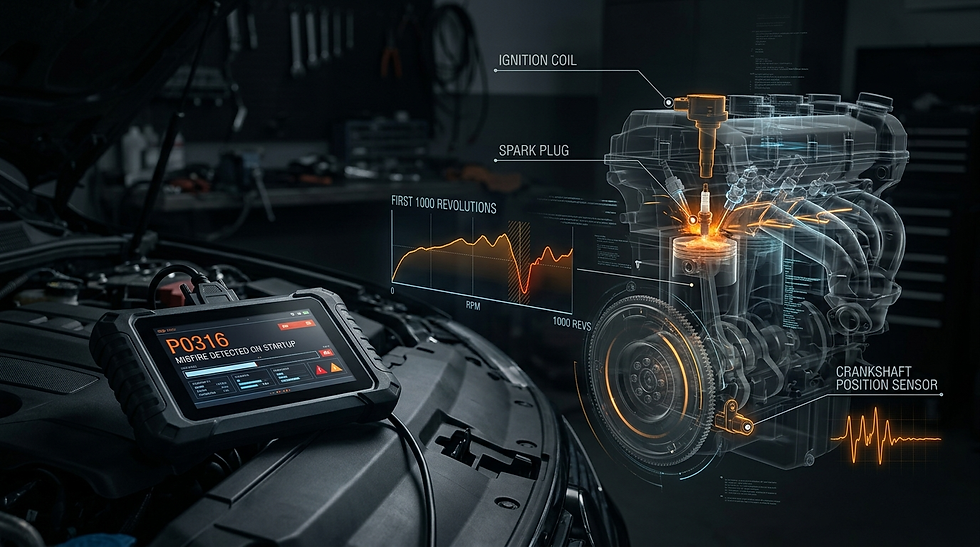
OBD Diagnostics for Fuel Injector Performance

Fuel injectors play a crucial role in delivering the precise amount of fuel needed for efficient combustion. When injectors malfunction, engines may experience rough performance, reduced fuel efficiency, and higher emissions.
Modern vehicles rely on OBD fuel injector diagnostics to monitor injector operation and identify problems early. By analyzing sensor data and fuel trim adjustments, the onboard diagnostic system helps technicians detect injector faults before they become serious.
How Fuel Injectors Work
Fuel injectors spray fuel directly into the engine’s combustion chamber. The engine control unit (ECU) determines how much fuel to deliver based on various inputs such as engine load, air intake, and throttle position.
Proper fuel injection ensures smooth engine performance and optimal fuel economy.
How OBD Monitors Fuel Injectors
OBD systems monitor several parameters to evaluate injector performance:
Fuel trim levels
Oxygen sensor readings
Engine misfire detection
Fuel pressure signals
When the ECU detects abnormal patterns, it generates diagnostic trouble codes that point toward injector issues.
Signs of Fuel Injector Problems
Common symptoms include:
Rough idling
Poor acceleration
Increased fuel consumption
Engine misfires
Strong fuel odor
Early detection with OBD diagnostics can prevent engine damage and improve efficiency.
Conclusion
OBD fuel injector diagnostics allow drivers and technicians to identify fuel delivery problems quickly. By monitoring combustion efficiency and sensor feedback, the system helps maintain smooth engine operation and reduce unnecessary fuel consumption.
Regular diagnostic checks ensure that injectors continue delivering fuel precisely and efficiently.