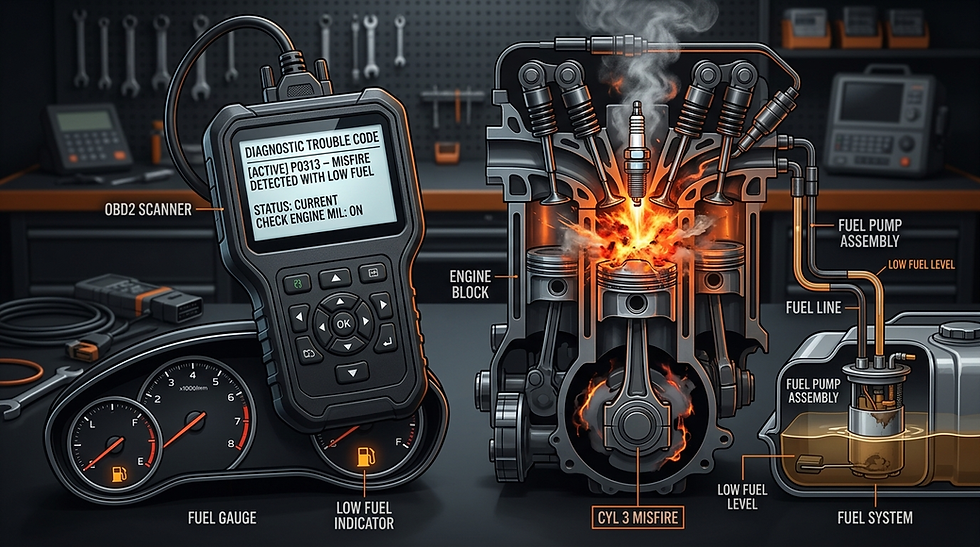
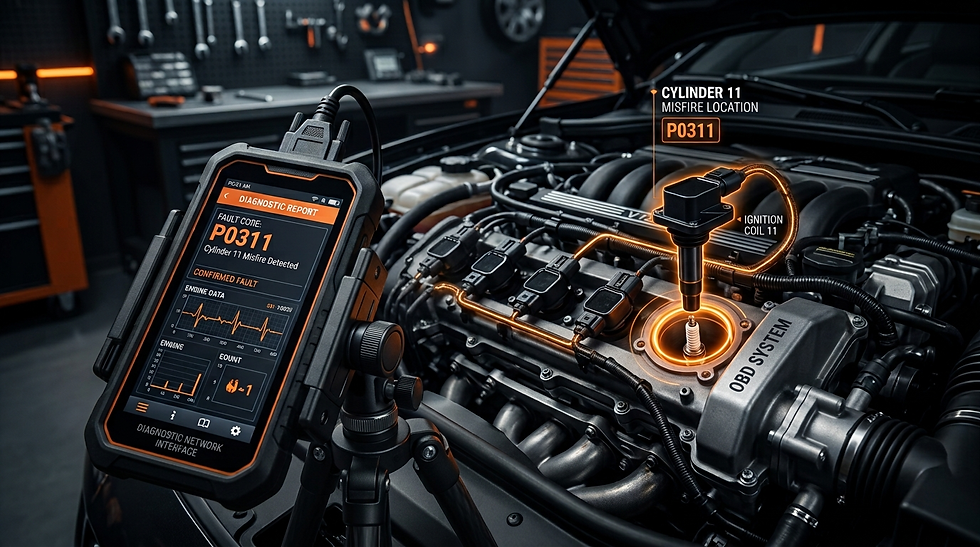
OBD Data and Emissions Control – How Diagnostics Support Environmental Compliance
Vehicle emissions are strictly regulated worldwide to reduce environmental impact. OBD emissions diagnostics play a critical role in monitoring and maintaining emission control systems, ensuring vehicles comply with legal standards while operating efficiently.
Role of OBD in Emissions Monitoring
OBD systems continuously monitor components that affect emissions, including:
Oxygen sensors
Catalytic converters
Exhaust gas recirculation (EGR) systems
Evaporative emission systems (EVAP)
If any component fails to operate within acceptable limits, the OBD system records a fault code and triggers the check engine light.
How OBD Detects Emission Issues
OBD diagnostics evaluate:
Air-fuel ratio imbalance
Inefficient catalytic conversion
Exhaust leaks
Sensor failures
This allows quick identification of emission-related problems.
Benefits of OBD Emissions Diagnostics
Helps vehicles pass emissions inspections
Reduces harmful pollutants
Ensures compliance with environmental regulations
Improves engine efficiency
OBD and Government Regulations
Modern OBD standards are designed to align with global emission regulations. Vehicles failing emission checks can be identified quickly, reducing long-term environmental damage.
Conclusion
OBD emissions diagnostics protect both the environment and vehicle performance by ensuring compliance and efficiency.