OBD and All-Wheel Drive Systems: Monitoring Performance
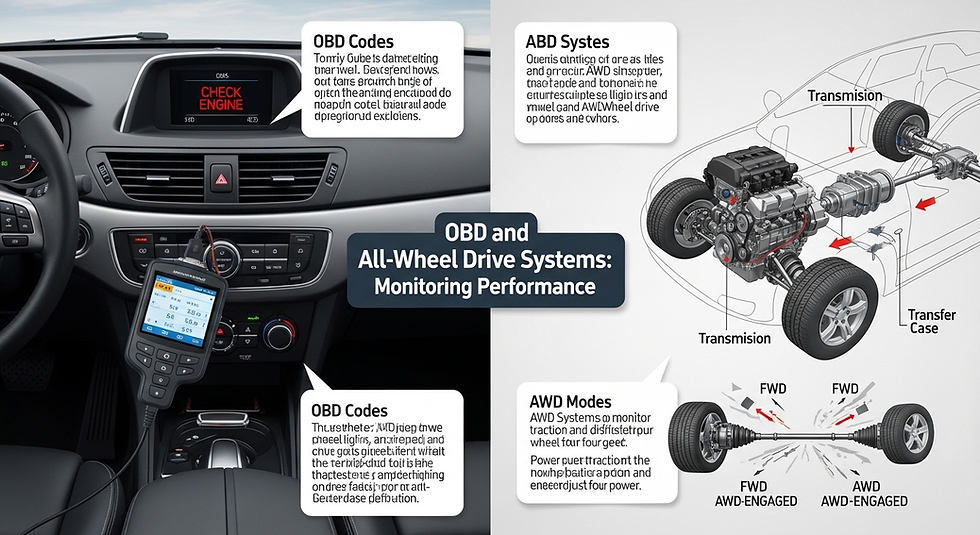
All-wheel drive (AWD) vehicles provide better traction and stability. However, they are more complex than standard drivetrains. OBD AWD monitoring ensures that all components function properly.
Proper monitoring prevents costly drivetrain damage.
Understanding AWD Systems
AWD systems distribute power between front and rear wheels automatically.
They rely on:
Transfer cases
Differential systems
Wheel speed sensors
Electronic control modules
If one component fails, performance suffers.
How OBD Supports AWD
OBD monitors:
Wheel speed sensors
Torque distribution
Differential performance
Control module communication
Fault codes alert drivers to potential issues.
Preventing Drivetrain Damage
Undetected AWD issues can cause:
Uneven tire wear
Reduced traction
Transmission stress
Expensive repairs
OBD detects irregularities early.
Improving Driving Safety
Proper AWD monitoring ensures:
Better handling
Improved control in rain or snow
Safer driving conditions
OBD plays a major role in safety.
Conclusion
OBD AWD monitoring protects complex drivetrain systems by detecting faults early and ensuring balanced power distribution. For AWD vehicles, regular OBD checks are essential for maintaining performance and safety.