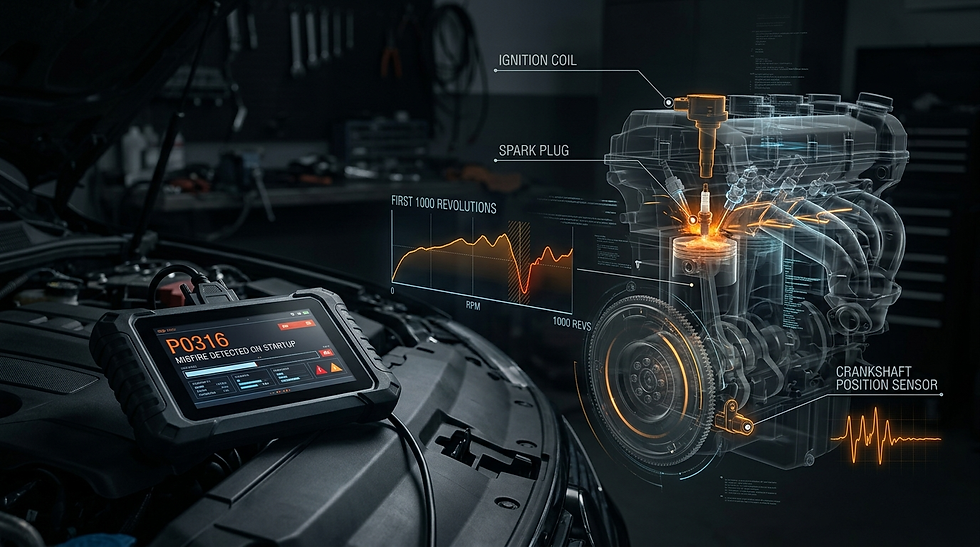
How OBD2 Helps Diagnose Transmission Problems

Modern vehicles rely heavily on computerized systems to monitor engine and transmission performance. One of the most helpful technologies for diagnosing vehicle problems is the OBD2 (On-Board Diagnostics) system. While many drivers associate OBD2 with engine issues, it is also very useful for detecting transmission problems.
With the help of OBD2 transmission diagnostics, technicians and car owners can quickly identify faults in the gearbox system before they lead to serious damage.
Understanding Transmission Systems
The transmission system is responsible for transferring engine power to the wheels. It ensures that the vehicle operates efficiently at different speeds.
Modern transmissions include several electronic components such as sensors, solenoids, and control modules. If any of these components fail, the transmission may start showing performance issues.
Common transmission symptoms include:
Hard gear shifting
Delayed acceleration
Transmission slipping
Unusual noises
These problems can often be identified through the OBD2 system.
How OBD2 Detects Transmission Problems
The OBD2 system constantly monitors the vehicle’s sensors and performance data. When the system detects abnormal readings related to the transmission, it stores a diagnostic trouble code (DTC).
Examples of transmission-related OBD2 codes include:
P0700 – Transmission control system malfunction
P0715 – Input speed sensor circuit problem
P0730 – Incorrect gear ratio
These codes help mechanics quickly locate the problem.
Benefits of Using OBD2 for Transmission Diagnostics
Using OBD2 diagnostics provides several advantages:
Faster troubleshooting
Reduced repair costs
Early detection of problems
Accurate fault identification
This technology allows technicians to repair transmission problems before they cause major damage.
Conclusion
OBD2 transmission diagnostics play an important role in maintaining vehicle performance. By detecting issues early, drivers can avoid expensive repairs and ensure smoother driving.
Regular diagnostic scans help keep both the engine and transmission operating efficiently.