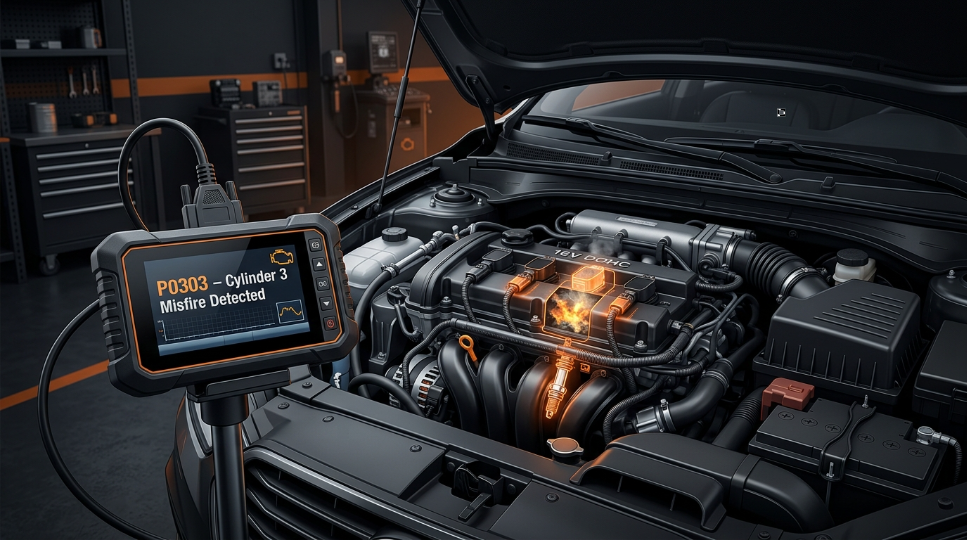
How OBD2 Helps Diagnose Engine Performance Problems

Engine performance problems can significantly affect driving experience and fuel efficiency. Fortunately, modern vehicles use OBD2 engine performance diagnostics to identify these issues quickly.
This diagnostic system monitors multiple engine components and sensors.
Common Causes of Performance Problems
Engine performance issues may result from several factors including:
Faulty sensors
Fuel system problems
Ignition system failures
Air intake restrictions
These issues can reduce engine power and efficiency.
How OBD2 Diagnoses Performance Issues
The OBD2 system collects data from various sensors and compares it to expected values.
If abnormal readings occur, the system stores diagnostic trouble codes that help technicians identify the problem.
Examples include:
P0101 – Mass air flow sensor performance issue
P0300 – Random engine misfire detected
Benefits of OBD2 Performance Diagnostics
Using OBD2 tools helps drivers and mechanics:
Detect engine issues early
Improve repair accuracy
Reduce maintenance costs
This technology makes troubleshooting much more efficient.
Conclusion
OBD2 engine performance diagnostics provide valuable insights into vehicle operation. By identifying problems early, drivers can maintain optimal engine performance and reliability.
Regular diagnostic checks help keep the engine running smoothly.