How OBD2 Helps Detect Fuel Pump Problems

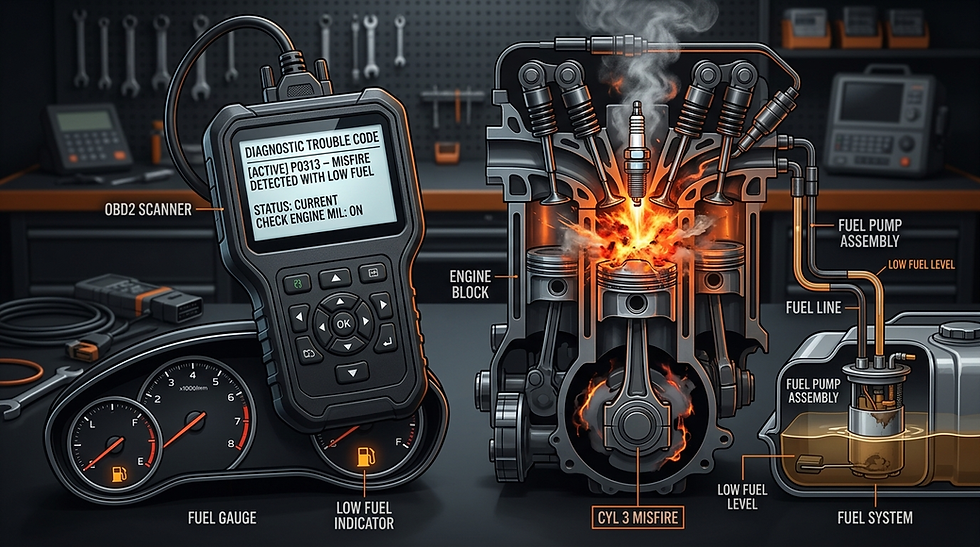
The fuel pump is responsible for delivering fuel from the tank to the engine. If it fails, the engine may not receive enough fuel to operate properly.
Modern vehicles use OBD2 fuel pump diagnostics to monitor fuel system performance and detect potential problems.
Role of the Fuel Pump
The fuel pump ensures that fuel reaches the engine at the correct pressure.
Proper fuel delivery is essential for:
Smooth engine operation
Efficient fuel combustion
Optimal engine power
If the pump fails, the vehicle may struggle to start or stall during driving.
How OBD2 Detects Fuel Pump Issues
The OBD2 system monitors fuel pressure and engine performance data.
If fuel delivery is inconsistent, the system may generate diagnostic trouble codes such as:
P0087 – Fuel rail pressure too low
P0230 – Fuel pump primary circuit malfunction
These codes help mechanics identify fuel pump problems quickly.
Symptoms of a Failing Fuel Pump
Drivers may notice several warning signs including:
Difficulty starting the vehicle
Engine sputtering
Loss of power during acceleration
Reduced fuel efficiency
Conclusion
OBD2 fuel pump diagnostics help detect fuel delivery issues before they lead to serious engine problems. Early diagnosis ensures reliable engine performance and prevents unexpected breakdowns.
Routine diagnostic scans help maintain the health of the fuel system.