How OBD2 Helps Detect Alternator Problems
The alternator is responsible for charging the vehicle’s battery and powering electrical
systems while the engine is running. If the alternator fails, the battery can quickly drain, leading to vehicle breakdown.
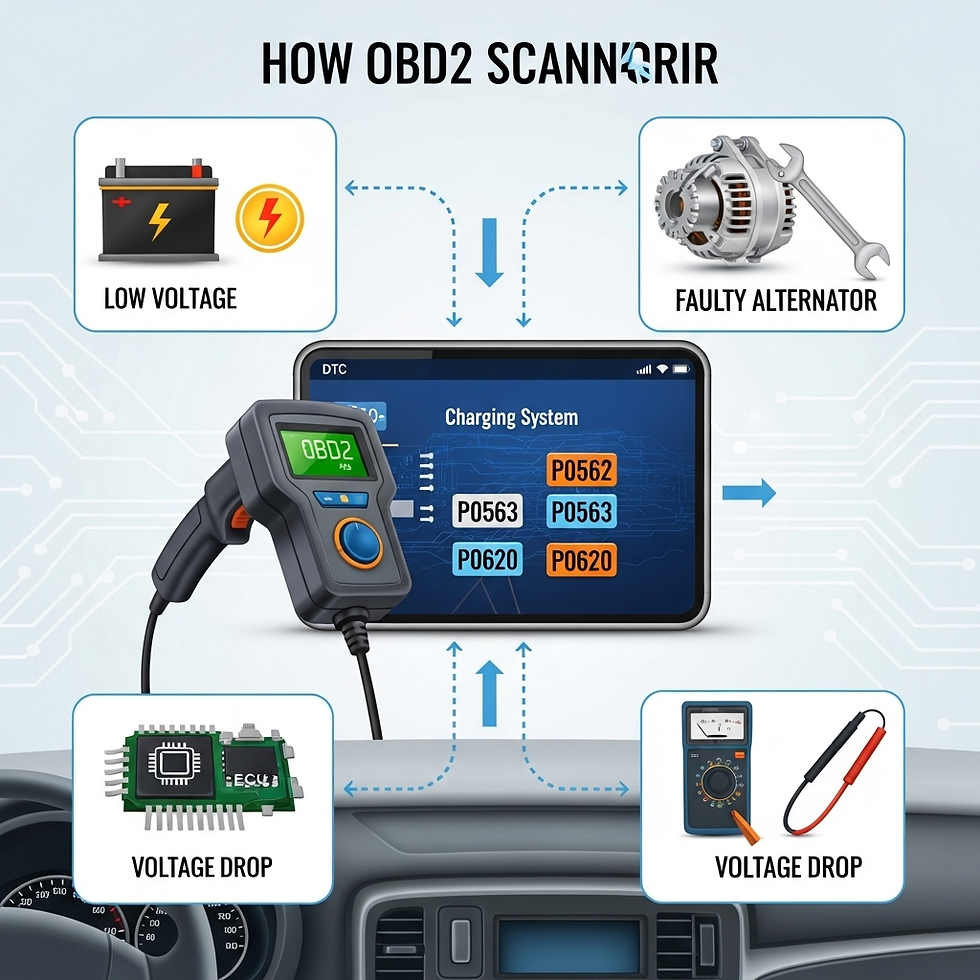
Modern vehicles use OBD2 alternator diagnostics to monitor the charging system and detect faults early.
Role of the Alternator
The alternator converts mechanical energy into electrical energy to:
Charge the battery
Power lights and electronics
Support engine control systems
A failing alternator can disrupt all these functions.
How OBD2 Detects Alternator Issues
OBD2 systems monitor voltage levels and electrical signals. If irregular charging patterns are detected, the system may trigger diagnostic codes related to electrical faults.
Signs of Alternator Problems
Dim or flickering headlights
Weak battery performance
Electrical system failures
Warning lights on dashboard
Conclusion
OBD2 alternator diagnostics help ensure a stable electrical supply in the vehicle. Early detection of charging system issues prevents breakdowns and maintains vehicle reliability.