How OBD Monitors Crankshaft and Camshaft Sensor Performance

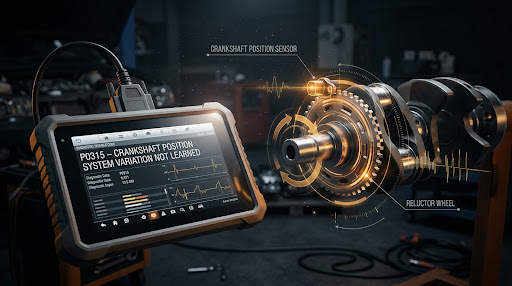
Your engine depends on precise timing to run efficiently. Two critical components responsible for this timing are the crankshaft sensor and camshaft sensor. If either fails, engine performance suffers immediately. OBD crankshaft sensor monitoring helps detect these problems before major engine damage occurs.
Modern vehicles rely heavily on sensor accuracy, and OBD ensures everything stays synchronized.
Role of Crankshaft and Camshaft Sensors
These sensors monitor:
Engine rotation speed
Piston position
Valve timing
Ignition timing
They ensure fuel injection and spark timing occur at the exact right moment.
How OBD Detects Sensor Issues
OBD continuously analyzes data from both sensors. If it detects:
Irregular timing signals
Missing signal pulses
Synchronization errors
It stores a diagnostic trouble code and activates the warning light.
Symptoms of Sensor Failure
Drivers may notice:
Difficulty starting
Engine stalling
Reduced power
Poor acceleration
Rough idling
OBD confirms whether the issue is sensor-related.
Preventing Engine Damage
Incorrect timing can lead to:
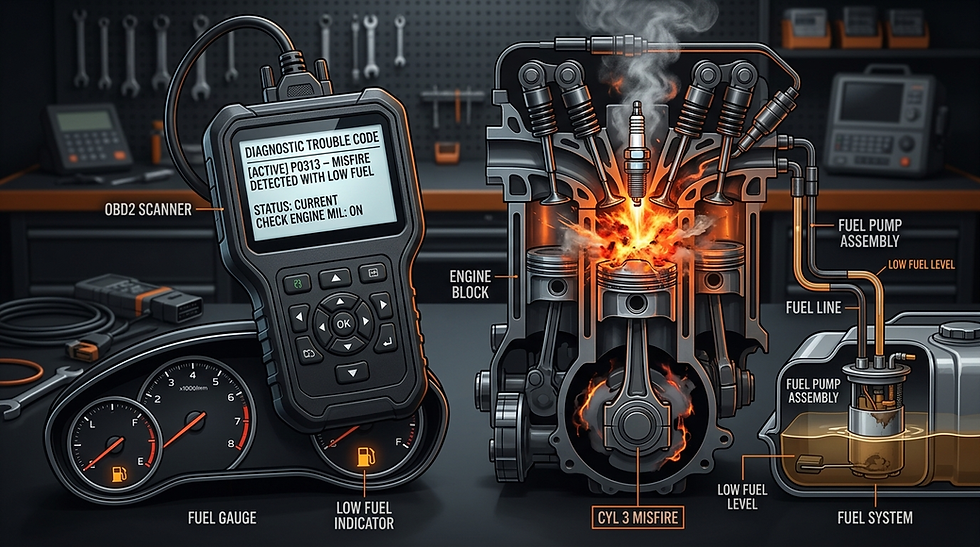
Misfires
Poor fuel combustion
Increased emissions
Severe engine damage in interference engines
Early detection prevents costly repairs.
Improving Engine Efficiency
When sensors operate correctly:
Fuel burns efficiently
Acceleration is smooth
Engine runs quietly
Fuel economy improves
OBD ensures optimal synchronization.
Conclusion
OBD crankshaft sensor monitoring protects your engine by ensuring proper timing and synchronization. Early fault detection prevents serious mechanical damage, improves performance, and keeps your vehicle running reliably.