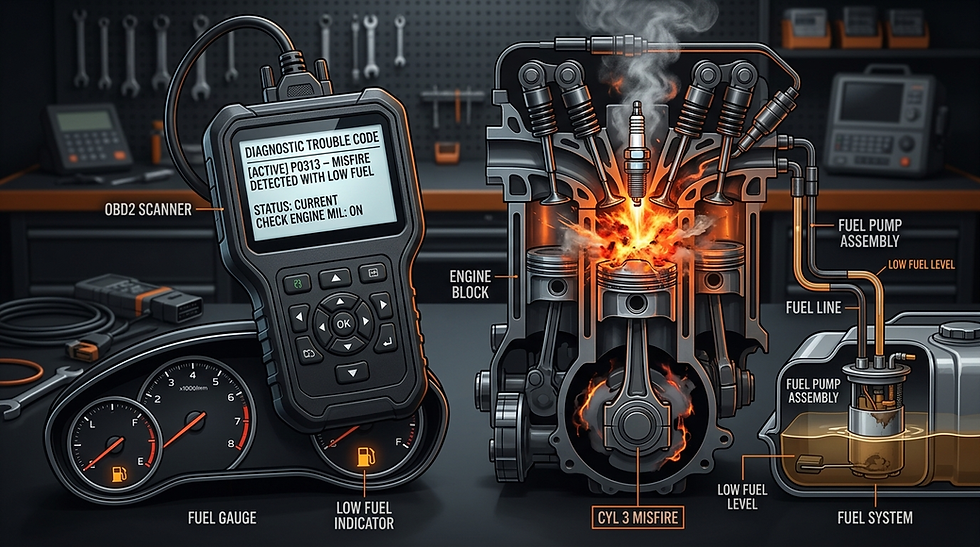
How OBD Helps Monitor Variable Valve Timing (VVT) Systems

Variable Valve Timing (VVT) systems improve engine performance and fuel efficiency by adjusting valve timing based on driving conditions. OBD VVT monitoring ensures this system operates smoothly.
If VVT malfunctions, performance and fuel economy decline quickly.
How VVT Systems Work
VVT adjusts valve timing to:
Improve low-speed torque
Increase high-speed power
Enhance fuel efficiency
Reduce emissions
Precise control is essential.
How OBD Monitors VVT Performance
OBD tracks:
Camshaft position
Oil pressure control
Timing adjustments
Sensor synchronization
If values fall outside expected ranges, fault codes are stored.
Common VVT Problems
Issues may include:
Dirty engine oil
Faulty solenoids
Oil flow restrictions
Sensor failures
OBD detects these irregularities early.
Preventing Performance Loss
Malfunctioning VVT can cause:
Rough idle
Reduced power
Increased fuel consumption
Engine warning lights
OBD alerts drivers quickly.
Improving Engine Longevity
Proper valve timing reduces internal stress and improves combustion balance.
OBD ensures optimal timing adjustments.
Conclusion
OBD VVT monitoring plays a vital role in maintaining modern engine efficiency. By detecting timing irregularities early, it protects performance, improves fuel economy, and prevents costly engine damage.