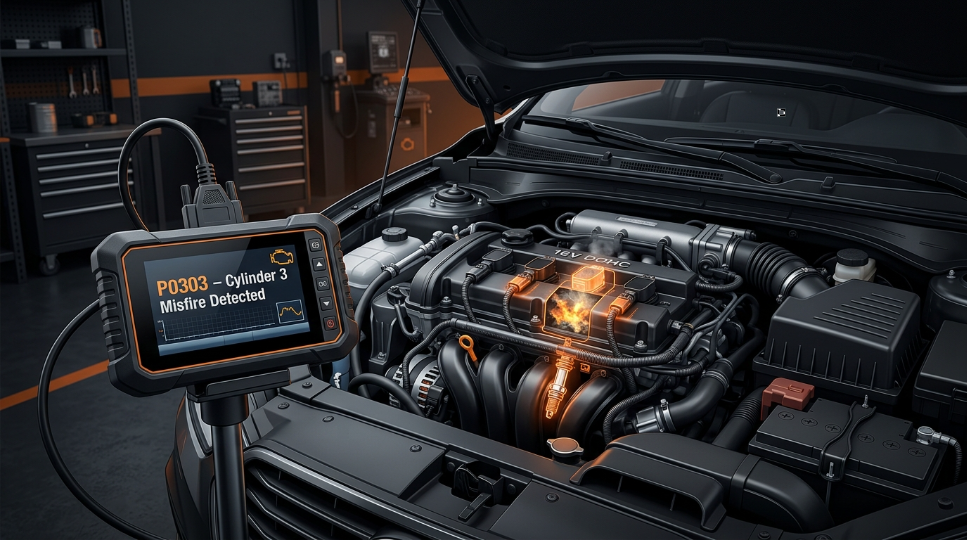
How OBD Helps Identify Fuel Injector Problems

Fuel injectors deliver fuel directly into the engine cylinders. When they malfunction, engine performance suffers. OBD fuel injector diagnosis helps detect these problems quickly and accurately.
Early detection prevents efficiency loss and engine damage.
Signs of Fuel Injector Problems
Common symptoms include:
Rough idling
Poor fuel economy
Engine hesitation
Increased emissions
OBD confirms the exact issue.
How OBD Detects Injector Issues
OBD monitors:
Fuel trim values
Air-fuel ratios
Combustion performance
Sensor feedback
Irregular readings indicate injector problems.
Preventing Engine Damage
Faulty injectors can cause:
Lean or rich fuel mixtures
Overheating
Catalytic converter damage
OBD alerts drivers before severe consequences occur.
Improving Fuel Efficiency
Proper injector performance ensures:
Balanced combustion
Smooth acceleration
Reduced fuel waste
OBD helps maintain this balance.
Reducing Emissions
Efficient injectors lower harmful emissions.
OBD ensures environmental compliance.
Conclusion
OBD fuel injector diagnosis protects engine health, improves fuel efficiency, and reduces emissions. By detecting problems early, OBD helps maintain smooth performance and prevent costly repairs.