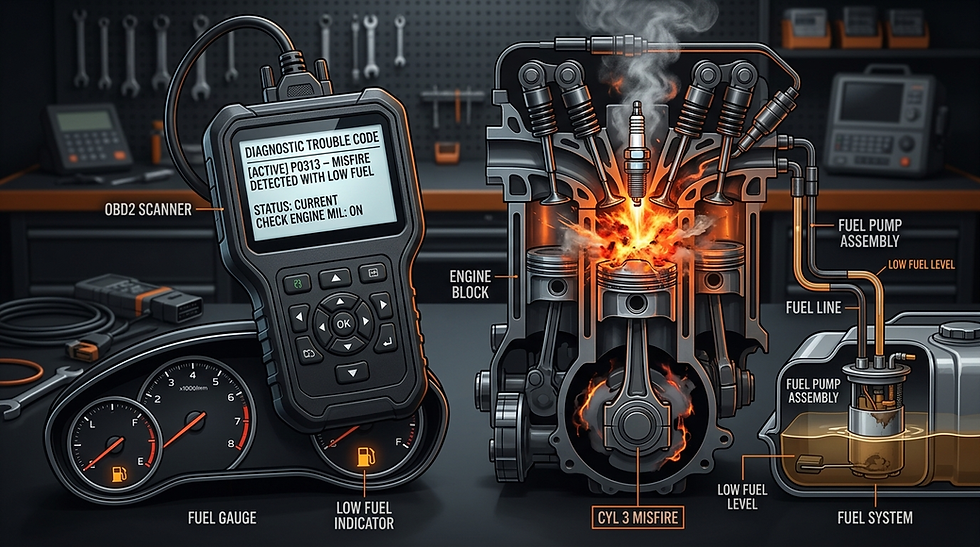
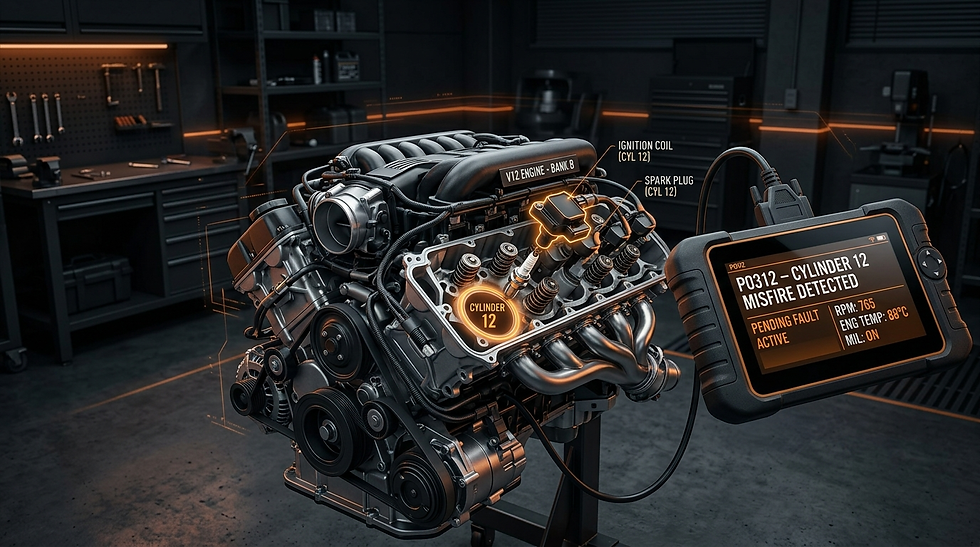
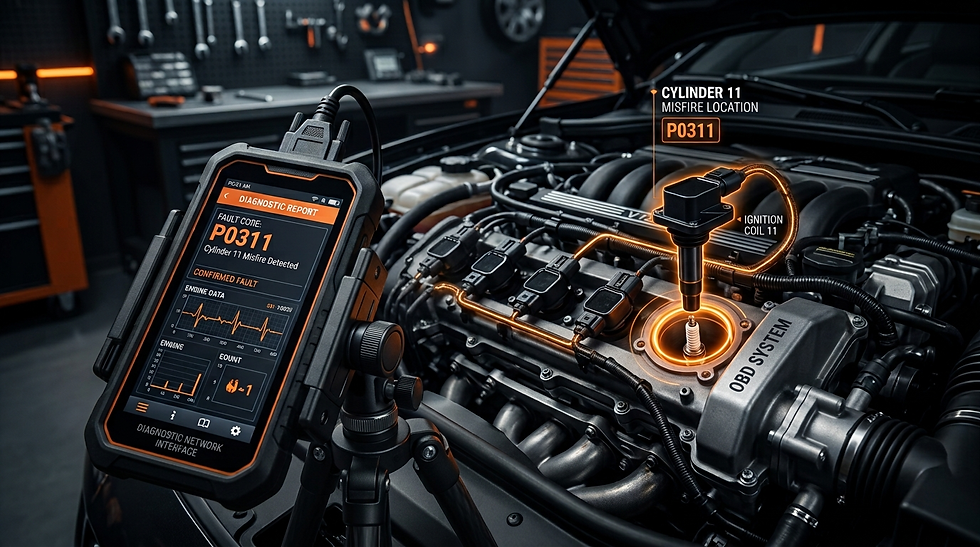
Understanding the Most Common OBD2 Trouble Codes and What They Mean

When the check engine light comes on, the first step is understanding what the trouble code means. Some OBD2 codes appear far more frequently than others, and recognizing them can help you diagnose issues quickly — especially with a reliable tool like the CHEPQ OBD2 scanner.
Below are the most common OBD2 codes and what each one usually indicates.
1. P0300 — Random/Multiple Cylinder Misfire
This code means the engine is misfiring but can’t pinpoint one specific cylinder.Possible causes:
Bad spark plugs
Faulty ignition coils
Fuel delivery issues
Vacuum leaks
CHEPQ scanners can help identify which cylinder is misfiring and why.
2. P0420 — Catalyst System Efficiency Below Threshold
This code suggests your catalytic converter isn’t performing correctly.Common causes include:
Aging catalytic converter
Faulty oxygen sensors
Exhaust leaks
Ignoring this code can lead to expensive repairs.
3. P0171 — System Too Lean (Bank 1)
This means the engine is receiving too much air or too little fuel.Often caused by:
Dirty MAF sensor
Vacuum leaks
Weak fuel pump
Clogged injectors
CHEPQ’s live data helps pinpoint the airflow or fuel issue.
4. P0442 — EVAP System Leak Detected
This code indicates a small fuel vapor leak.Usually caused by:
Loose gas cap
Faulty purge valve
EVAP hose cracks
It’s one of the most common — and often easiest — issues to fix.
5. P0507 — Idle Control System RPM Too High
This points to an air intake or throttle body issue.Common triggers:
Dirty throttle body
Intake air leaks
Improper idle control
Live data monitoring helps spot irregular RPM behavior.
Conclusion
Knowing common OBD2 trouble codes saves time, reduces repair costs, and improves vehicle health. With CHEPQ’s diagnostic tools, understanding and resolving these issues becomes faster, simpler, and far more accurate.