Understanding OBD Live Data and How It Helps Vehicle Diagnostics
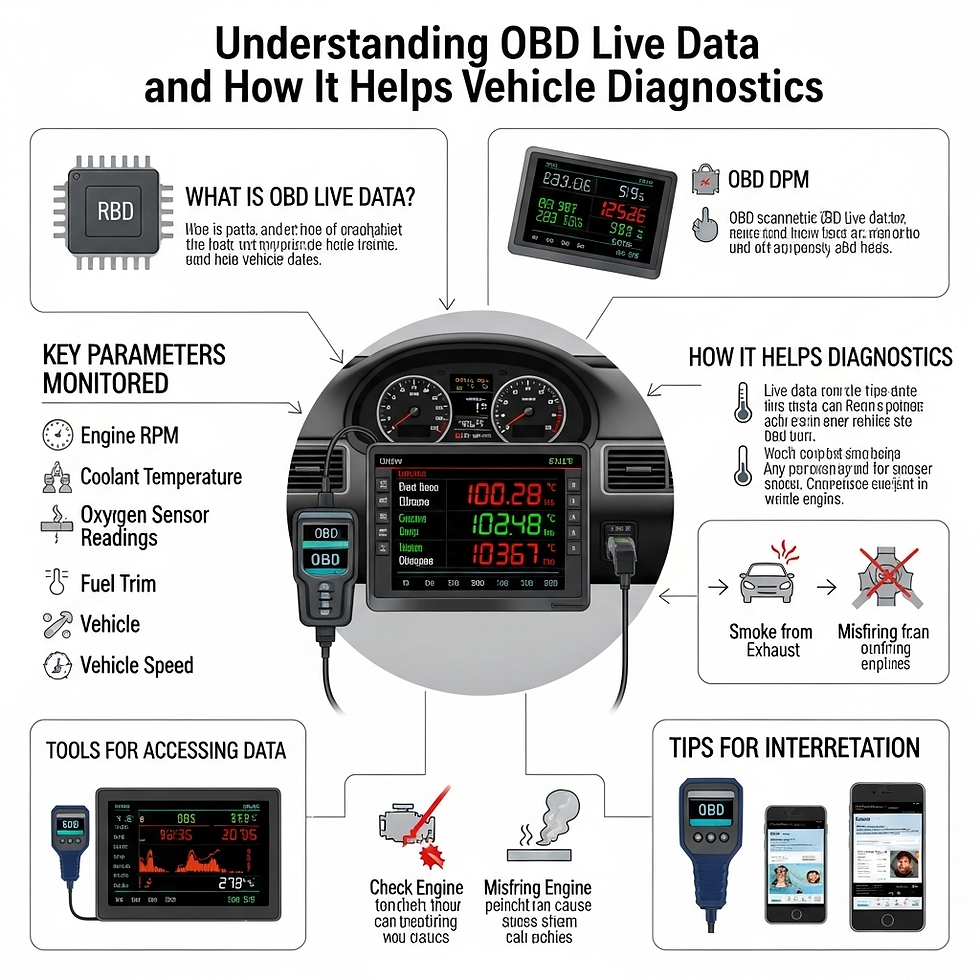
One of the most powerful features of modern diagnostic tools is OBD live data monitoring. Unlike stored error codes, live data provides real-time information about how the vehicle is performing at any moment.
This information helps technicians analyze engine behavior, detect abnormal patterns, and diagnose problems that may not trigger a warning light.
What Is OBD Live Data?
Live data refers to the continuous stream of information sent by sensors to the vehicle’s ECU. Diagnostic tools can display this information instantly while the engine is running.
Some commonly monitored values include:
Engine RPM
Throttle position
Airflow measurements
Fuel trim values
Coolant temperature
These readings help identify performance irregularities.
Benefits of Live Data Diagnostics
Live data monitoring offers several advantages:
Detects problems before warning lights appear
Provides detailed engine performance insights
Helps technicians verify repairs
Allows more accurate diagnostics
This feature is especially useful for intermittent issues.
When Live Data Is Most Useful
Technicians often rely on live data when diagnosing:
Poor fuel efficiency
Engine hesitation
Idle instability
Sensor inconsistencies
Real-time monitoring makes it easier to locate the root cause.
Conclusion
OBD live data monitoring gives technicians valuable insight into how a vehicle operates in real time. By analyzing sensor data and system responses, they can diagnose complex problems more accurately.
This powerful feature improves repair accuracy and helps maintain optimal vehicle performance.


