How OBD2 Helps Monitor Fuel System Performance

The fuel system is responsible for delivering the correct amount of fuel to the engine for proper combustion. Any malfunction in this system can affect vehicle performance and fuel efficiency.
Modern vehicles use OBD2 fuel system monitoring to track fuel delivery and detect problems.
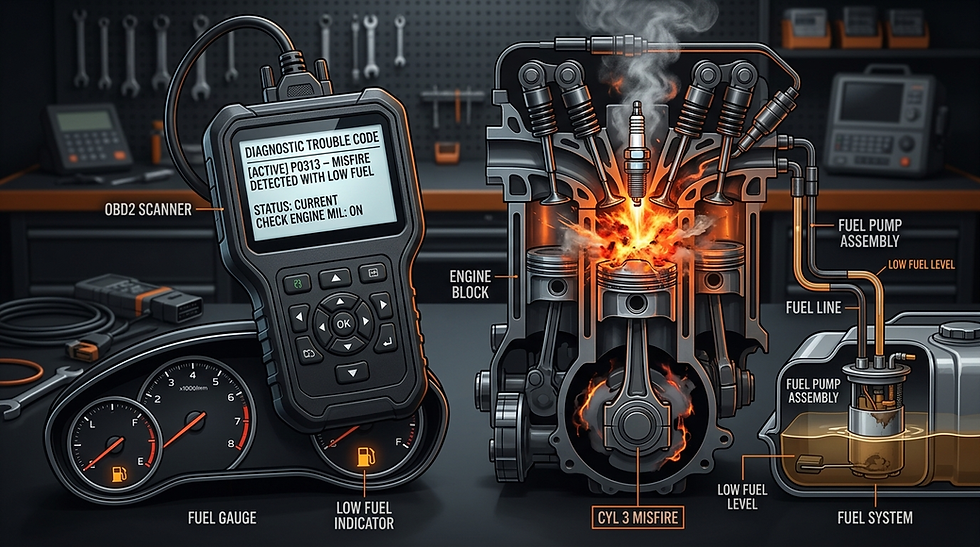
Components of the Fuel System
The fuel system includes several components:
Fuel pump
Fuel injectors
Fuel pressure regulator
Fuel lines
These components work together to ensure the engine receives the right amount of fuel.
How OBD2 Detects Fuel System Problems
OBD2 systems monitor fuel pressure, air-fuel ratio, and combustion efficiency.
If the system detects irregularities, it may generate diagnostic trouble codes such as:
P0172 – Fuel system too rich
P0171 – Fuel system too lean
These codes help identify problems in the fuel system.
Signs of Fuel System Issues
Drivers may notice several symptoms when the fuel system is not functioning properly:
Reduced engine power
Poor fuel economy
Engine hesitation
Difficulty starting the vehicle
Conclusion
OBD2 fuel system monitoring helps ensure efficient fuel delivery and optimal engine performance. By detecting problems early, drivers can avoid expensive repairs and maintain better fuel efficiency.
Regular diagnostic scans help keep the fuel system operating correctly.