How OBD Helps Identify Engine Misfires Quickly

Engine misfires are one of the most common issues drivers face. When a misfire occurs, one or more cylinders fail to burn fuel correctly. This leads to rough engine performance, poor fuel economy, and increased emissions.
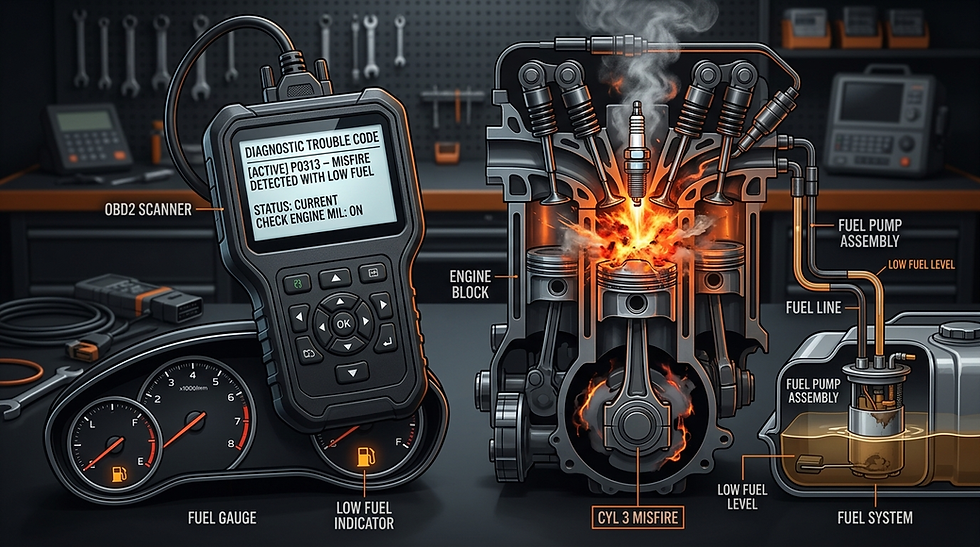
Modern vehicles rely on OBD engine misfire detection to identify these problems quickly. The onboard diagnostic system monitors engine performance in real time and stores fault codes when irregularities occur.
Understanding how OBD detects misfires helps drivers respond quickly before serious engine damage happens.
What Causes Engine Misfires
Several mechanical or electrical problems can trigger misfires, including:
Faulty spark plugs
Weak ignition coils
Fuel injector problems
Vacuum leaks
Low compression in cylinders
If these issues continue for too long, they may damage the catalytic converter.
How OBD Detects Misfires
OBD systems monitor engine rotation using crankshaft sensors. When a cylinder fails to fire properly, the system detects irregular speed changes in the crankshaft.
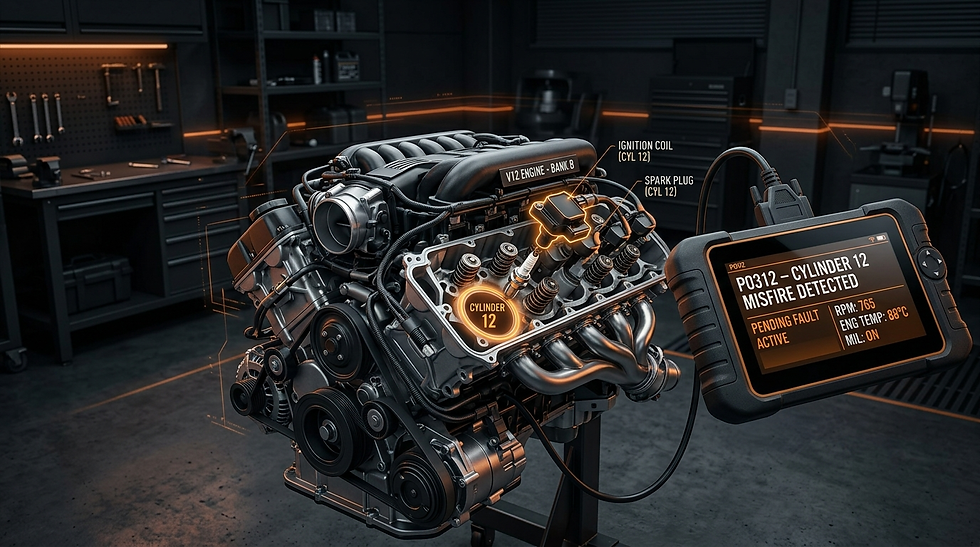
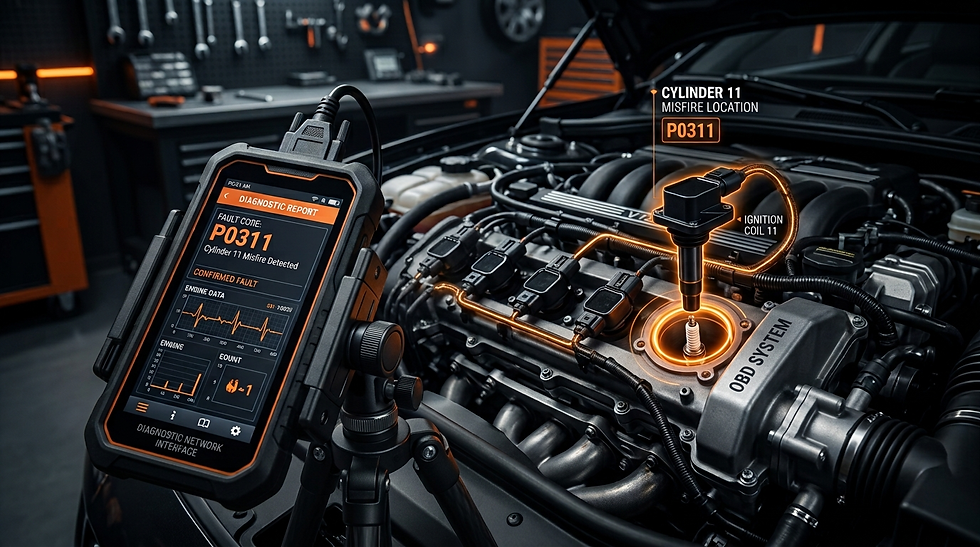
The ECU records this information and generates diagnostic codes such as:
P0300 – Random misfire detected
P0301–P0308 – Misfire in specific cylinders
These codes allow technicians to pinpoint the exact problem.
Why Early Detection Matters
Ignoring engine misfires can lead to several complications:
Catalytic converter damage
Increased fuel consumption
Engine vibration and rough running
Long-term engine wear
OBD scanning helps detect these issues before they become expensive repairs.
Conclusion
OBD engine misfire detection plays a critical role in protecting modern engines. By identifying misfires early, drivers can repair faulty components quickly and prevent costly engine damage.
Regular diagnostic scans ensure smooth performance, improved fuel efficiency, and longer engine life.