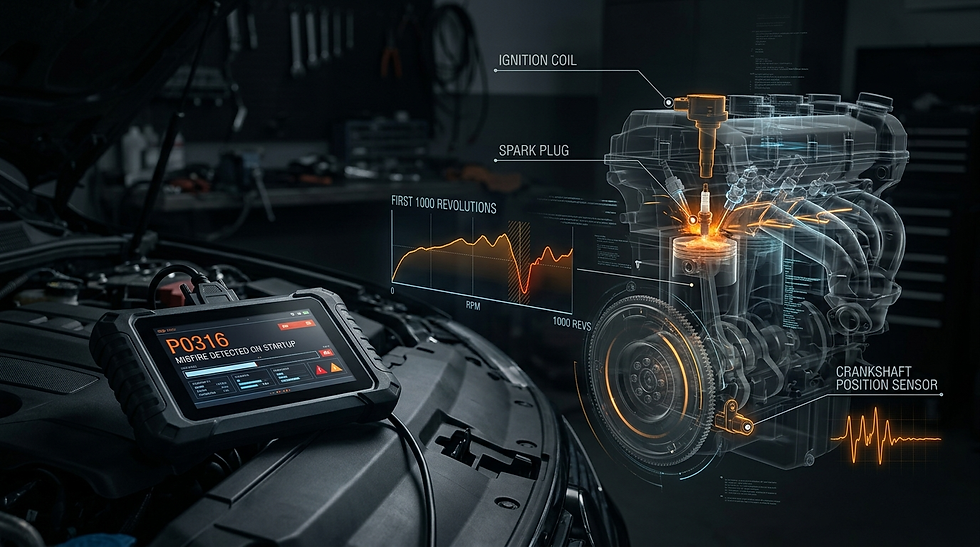
How OBD Detects Exhaust System Issues
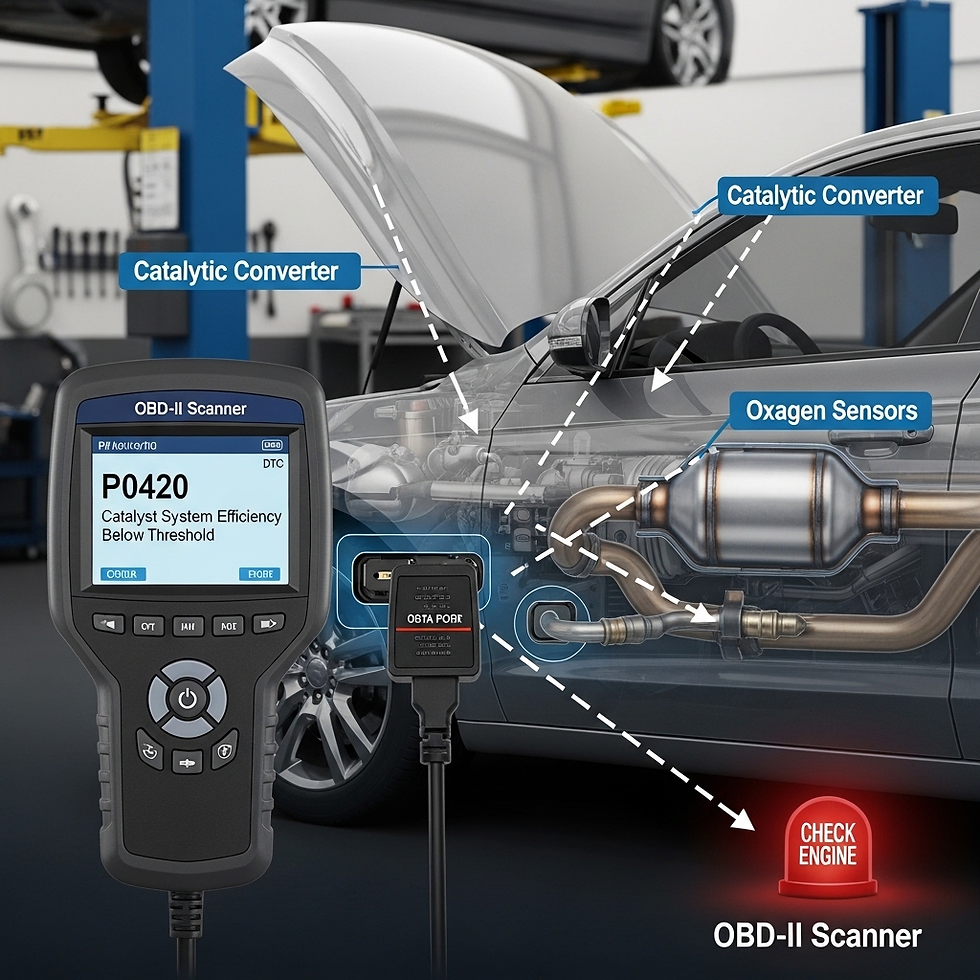
The exhaust system is responsible for removing combustion gases from the engine while reducing harmful emissions. When exhaust components fail, the vehicle may lose efficiency and produce excessive pollution.
Through OBD exhaust diagnostics, modern vehicles continuously monitor exhaust performance and emissions control systems.
Key Components of the Exhaust System
Important exhaust components include:
Catalytic converter
Oxygen sensors
Exhaust manifold
Muffler
Exhaust gas recirculation system
Each part plays a role in reducing emissions and improving efficiency.
How OBD Monitors Exhaust Performance
OBD systems analyze data from oxygen sensors placed before and after the catalytic converter.
These sensors measure oxygen levels in the exhaust gases. If readings fall outside normal ranges, the ECU generates fault codes.
Problems Detected by OBD Exhaust Diagnostics
Common issues include:
Catalytic converter failure
Oxygen sensor malfunction
Exhaust leaks
Emission system inefficiencies
These problems may trigger the check engine light.
Conclusion
OBD exhaust diagnostics help maintain environmental compliance and engine efficiency. By detecting emission system problems early, drivers can avoid expensive repairs and keep their vehicles operating within legal emission standards.