How AI and Machine Learning Are Revolutionizing Vehicle Diagnostics

The automotive industry is evolving rapidly, and one of the most significant technological shifts is the integration of Artificial Intelligence (AI) and Machine Learning (ML) into vehicle diagnostics. From individual car owners to fleet operators, AI-powered diagnostic tools are changing the way we maintain and monitor vehicles. With smarter OBD2 devices and telematics systems, predictive maintenance and real-time alerts are now accessible like never before.
The Role of AI and Machine Learning in Vehicle Diagnostics
AI and ML allow systems to analyze vast amounts of vehicle data in real time. Modern OBD2 devices, combined with cloud-based platforms, can detect anomalies, predict potential failures, and provide actionable insights. Unlike traditional diagnostics, which only flag existing issues, AI can forecast problems before they occur.
Key Advantages:
Predictive Maintenance: AI identifies patterns that indicate upcoming component failures, allowing timely intervention.
Reduced Repair Costs: Early detection prevents costly breakdowns.
Enhanced Safety: AI alerts drivers about critical issues before they become hazardous.
Fleet Efficiency: For businesses, AI-enabled diagnostics optimize fleet performance and reduce downtime.
AI-Powered OBD2 Devices
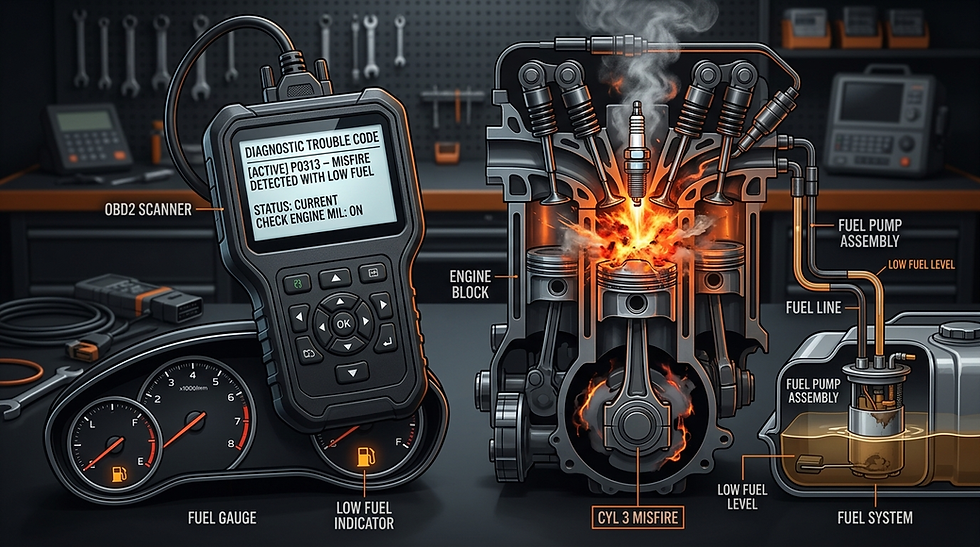
Traditional OBD2 scanners simply read error codes. AI-enhanced devices go beyond this by analyzing driving patterns, engine performance, and environmental factors. For example:
Detecting subtle irregularities in engine vibrations
Monitoring fuel efficiency trends over time
Alerting to potential battery or sensor malfunctions
These insights empower drivers and mechanics to address issues proactively rather than reactively.
Real-World Applications
Several automotive companies and tech startups are leveraging AI for diagnostics:
Fleet management companies use AI to schedule maintenance based on predictive analysis, reducing operational costs.
EV manufacturers integrate AI to monitor battery health and performance, ensuring longer lifespan.
Telematics providers use machine learning algorithms to detect unsafe driving behavior, improving safety and reducing insurance costs.
The Future of AI in Vehicle Diagnostics
AI and ML will continue to evolve, offering even more advanced predictive capabilities. Integration with IoT, cloud computing, and connected vehicles will enable:
Remote diagnostics and software updates
Personalized maintenance recommendations
Fully autonomous monitoring systems
As vehicles become smarter, AI will be at the center of preventive maintenance strategies, reshaping the automotive maintenance landscape.
Conclusion
AI and machine learning are no longer futuristic concepts—they are revolutionizing vehicle diagnostics today. By providing predictive maintenance, enhancing safety, and optimizing fleet operations, AI is a game-changer for drivers and businesses alike. The era of reactive repairs is ending, replaced by smarter, data-driven automotive care.