From Protocol Standardization to Predictive Cloud Telematics
Introduction: The Digital Nervous System of the Modern Vehicle
The transition of the automobile from a purely mechanical assembly to a sophisticated "computer on wheels" is one of the greatest engineering feats of the 21st century. At the heart of this transformation lies the OBD-II (On-Board Diagnostics) system. Originally mandated for emissions monitoring, the OBD-II port has evolved into a gateway for deep vehicle intelligence.
For university students and fleet engineers, understanding this evolution is critical. We aren't just reading fault codes; we are interpreting the real-time health of a complex cyber-physical system. To understand where we are going towards remote, API-driven telematics—we must first master the hardware and logic that keeps vehicles safe today.
The Mechanics of Diagnostic Logic
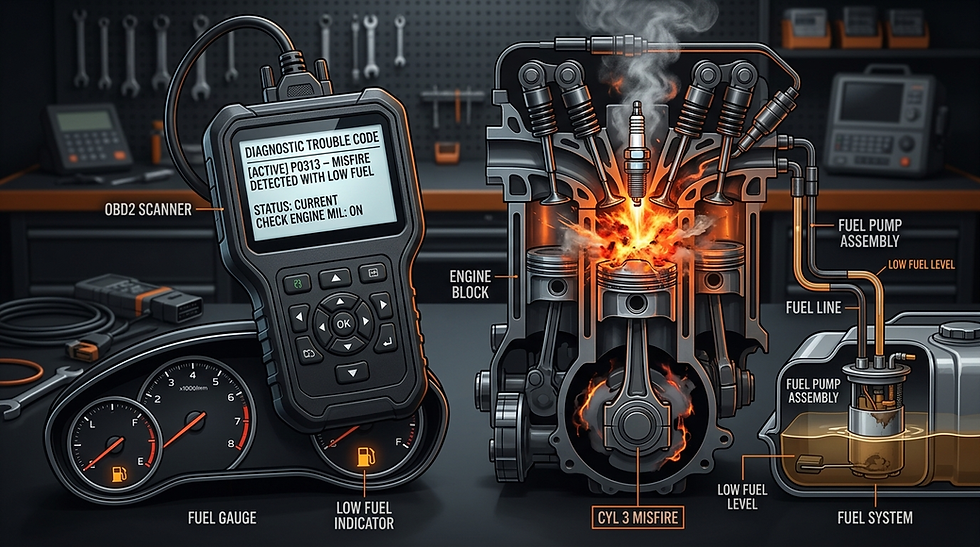
Every diagnostic event begins with a request/response cycle between the scanner and the vehicle's Electronic Control Units (ECUs). When a system deviates from its "nominal" operating range, it triggers a Diagnostic Trouble Code (DTC).
However, diagnosing a modern vehicle requires more than just reading a code; it requires understanding the environmental conditions surrounding the fault. This is where the depth of your diagnostic tools comes into play.

Technical Resource Matrix: Core Diagnostic QuestionsUse the table below to access specific troubleshooting protocols for core vehicle systems:
Diagnostic Focus | Strategic Q&A Link (Insert your links here) |
Safety Systems | |
Diesel Systems | |
Transmission | |
System Updates |
Related Knowledge & Troubleshooting Links:
1. The Standardization of Vehicle Communication
The foundational architecture of modern diagnostics relies on the transition from proprietary, siloed systems to standardized protocols. For the engineering student, the most significant leap was the adoption of the CAN Bus (Controller Area Network). This protocol allows for high-integrity communication between various ECUs without the need for a central host computer.
As vehicles evolved, the industry moved toward Automotive Standards Evolution, which ensured that a diagnostic tool could communicate across 10,000+ vehicle models. This interoperability is governed by protocols such as Diagnostic Communication Protocol (UDS), which provides the framework for advanced "Mode 6" data requests and ECU interrogation.
2. From Discrete Components to Integrated Systems
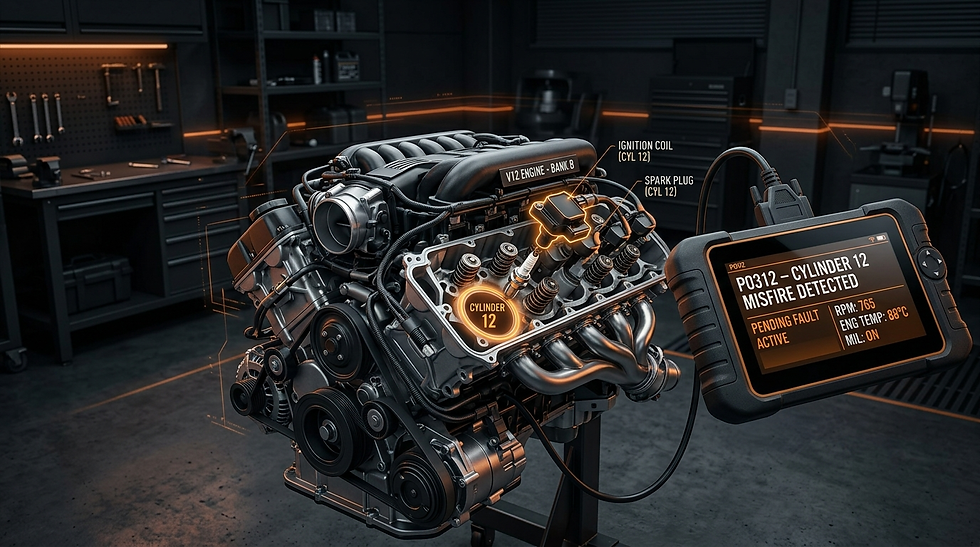
Historically, a Diagnostic Trouble Code (DTC) pointed to a singular mechanical failure. In the modern era, diagnostics must account for the Vehicle Network Architecture (VNA). For example, a fault in a Crankshaft Position Sensor or a Camshaft Position Sensor doesn't just affect timing; it triggers a ripple effect across the Powertrain Control Module (PCM) and the transmission.
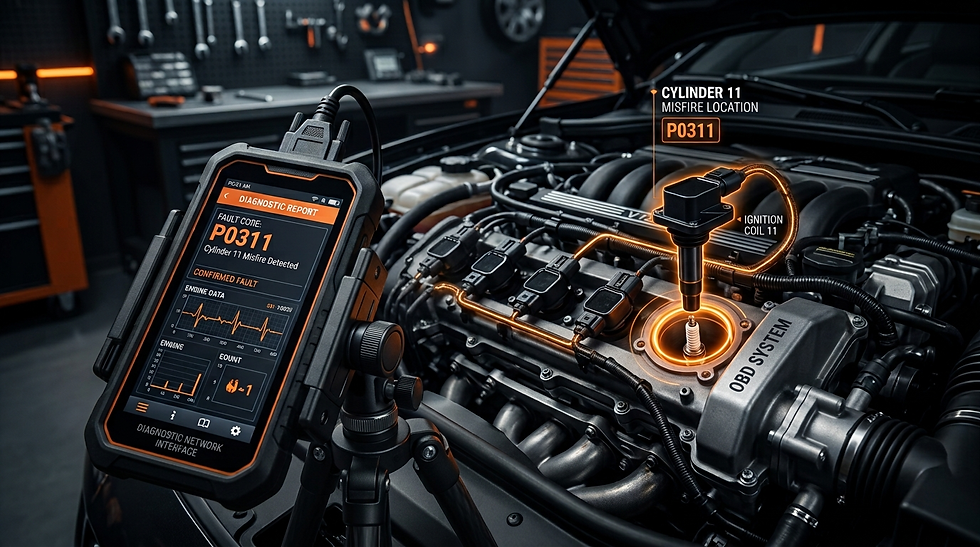
To manage this complexity, technicians now utilize AI-Assisted Diagnostics. These systems use machine learning to correlate Live Data Stream information with historical failure patterns, providing a "shortcut" to vehicle intelligence that bypasses traditional trial-and-error mechanics.
3. The Shift to Cloud-Based Intelligence
We are currently witnessing the "Fourth Industrial Revolution" of automotive service: the Automotive Cloud Platform. This allows for Remote Diagnostics, where a technician or fleet manager can interrogate a vehicle in another country via the Telematics Control Unit (TCU).
The future of this field lies in the Digital Twin—a virtual replica of the vehicle that exists on a Vehicle Digital Twin Cloud. This allows for Predictive Maintenance, where wear-and-tear is calculated through software simulations before a physical component ever fails.
4. Technical Reference Index (Knowledge Deep-Dive)
To fulfill the client's requirement, include this "Encyclopedia" section in the pillar post:
Foundational Hardware:
OBD-II Port: The standardized interface for all modern diagnostics.
Scan Tool Software: The digital logic layer of diagnostic hardware.
Automotive Ethernet: The high-speed future of vehicle networking.
System-Specific Intelligence:
Airbag Control Module: Managing collision safety data.
Battery Management System (BMS): Crucial for the EV transition.
Electronic Control Unit (ECU): The brain of every modern vehicle system.
Moving Toward Predictive Maintenance (Fleet ROI)
The "Pillar" of modern fleet management is moving from Reactive (fixing what is broken) to Predictive (fixing it before it breaks). By analyzing the data streams coming through the OBD-II port, fleet managers can identify patterns—such as a slight drop in battery voltage or a rise in transmission temperature—that signal an upcoming failure.
This proactive approach is what drives Return on Investment (ROI). Every hour a vehicle spends in the shop is an hour of lost revenue. By integrating digital repair orders and fleet intelligence, we close the loop between data and action.
Summary and Learning Outcomes
By the end of this study, students should recognize that the OBD-II port is no longer just a "plug." It is the entry point for Enterprise Vehicle Intelligence.
Outcome 1: Mastery of CAN bus protocol logic.
Outcome 2: Ability to differentiate between generic and manufacturer-specific DTCs.
Outcome 3: Strategic understanding of how data reduces the Total Cost of Ownership (TCO) in commercial fleets.