Common Check Engine Codes and How to Fix Them

Seeing your check engine light illuminate can be alarming. Luckily, most issues can be diagnosed easily using OBD2 scanners. By understanding car codes, you can identify the root cause and even fix minor problems yourself.
This guide covers common check engine codes, their meanings, and practical steps for repair.
Why Check Engine Lights Turn On
Your vehicle’s OBD2 system continuously monitors various systems, including the engine, transmission, and emissions. The check engine light triggers when a problem is detected, such as:
Faulty sensors
Engine misfires
Emissions system failures
Loose or damaged components
Common Check Engine Codes
1. P0300 – Random/Multiple Cylinder Misfire
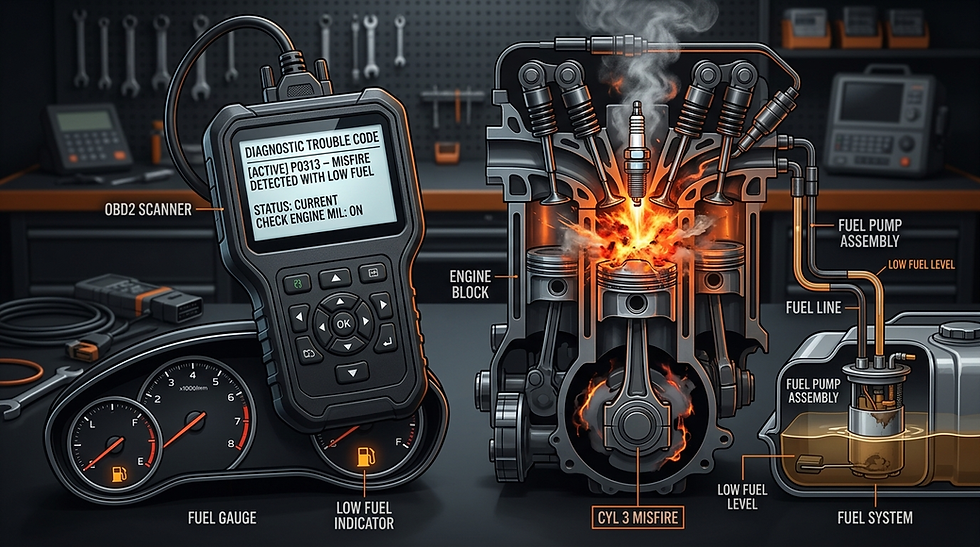
Meaning: One or more cylinders are misfiring.
Possible Causes: Worn spark plugs, faulty ignition coils, vacuum leaks.
Fix: Replace spark plugs or coils, check fuel system, and repair leaks.
2. P0420 – Catalyst System Efficiency Below Threshold
Meaning: The catalytic converter isn’t working efficiently.
Possible Causes: Failed catalytic converter, faulty oxygen sensors.
Fix: Replace the oxygen sensor or catalytic converter as needed.
3. P0171 – System Too Lean (Bank 1)
Meaning: Engine is receiving too little fuel or too much air.
Possible Causes: Vacuum leaks, dirty fuel injectors, faulty MAF sensor.
Fix: Inspect and clean fuel injectors, check for air leaks, replace sensors if necessary.
4. P0455 – Evaporative Emission System Leak Detected
Meaning: Leak detected in the fuel system.
Possible Causes: Loose or damaged gas cap, cracked hoses.
Fix: Tighten or replace the gas cap, inspect hoses for leaks.
5. P0135 – O2 Sensor Heater Circuit Malfunction
Meaning: Oxygen sensor heating circuit malfunction.
Possible Causes: Faulty O2 sensor, wiring issues.
Fix: Replace oxygen sensor or repair wiring.
Steps to Fix Check Engine Codes
Scan for Codes: Use an OBD2 scanner to retrieve codes.
Research the Code: Understand the code’s meaning using apps or online resources.
Inspect the Problem Area: Check related components (sensors, spark plugs, hoses).
Perform the Repair: Replace faulty parts or fix leaks.
Clear Codes: Use the scanner to reset the check engine light and test.
When to Seek Professional Help
Some issues require professional expertise:
Transmission-related codes
Complex engine misfires
Emissions system failures affecting compliance
Professional mechanics have advanced diagnostic tools and expertise to handle complicated problems safely.
Preventive Tips to Avoid Check Engine Issues
Perform regular maintenance (oil change, spark plugs, filters).
Use quality fuel and additives if needed.
Inspect hoses, belts, and connectors regularly.
Monitor engine performance and address minor issues early.
Conclusion
Understanding common check engine codes empowers you to diagnose problems quickly. With the help of OBD2 scanners, minor issues can be fixed at home, saving time and money. Regular maintenance and attention to early warning signs will keep your car running smoothly and reliably.